
Staticus: What Is Static Pressure in Air Ducts?
Meet Staticus, the Wing Force villain made of crushed ducts, and learn what static pressure is, why it weakens airflow, and how kids can help.
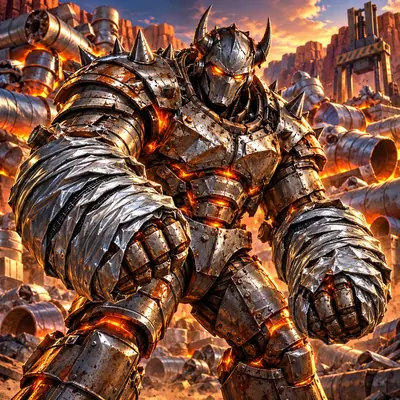
Villain facts
| Name | Staticus (say it STAT-ih-kus) |
|---|---|
| Side | Villain |
| Lair | The Crush, a scrapyard maze of giant crushed ducts in Crushpile Canyon |
| Powers and tricks | The Crusher (squashed ducts), Kink Knot (sharp bends), The Sag (droopy ducts), The Narrows (ducts too small), Dust Wall (a clogged filter), Shut Gate (blocked vents) |
| Henchmen | Kink-lings, crinkly duct worms that tie themselves in knots |
| Weakness | Air that flows freely. Every open path knocks a plate off his armor. |
| Catchphrase | “Nothing gets through.” |
Where did Staticus come from?
From the Wing Force files.
Far out in Crushpile Canyon, where the ground is dry and cracked, lies a scrapyard nobody visits. Ducts as big as train cars lie flattened, bent and twisted into walls. Orange light glows through the seams.
It started with one hot attic. The ducts were too small. Long, floppy tubes were stretched around sharp corners, squashed under boxes and sagging between the beams. The filter had not been changed in a long, long time. Every time the fan switched on, the air slammed into a wall.
On the hottest afternoon of August, all that trapped push had nowhere left to go. Bent metal dragged itself together, plate by plate. Two orange eyes opened in the dark.
“Nothing gets through,” he rumbled. “Not on my watch.”
Now Staticus sits on a throne of crushed ducts, planning the Great Squeeze. Read his comic: see how the Wing Force opened the path in Wing Force #3: The Great Squeeze.
What is Staticus, really?
Staticus is static pressure: the push-back air feels when something squeezes its path. He has nothing to do with static electricity, the kind that makes a balloon stick to your hair. Same first word, totally different science.
Here’s how it works. Most homes with central air have a big fan, called a blower, that pushes air through long tunnels called ducts. The air travels out through the vents into your rooms, then comes back through a big grille called the return. Along the way, the air has to squeeze through a filter, a coil and every bend in the ducts. Each one pushes back a little.
That push-back is static pressure. A little is normal. Too much, and the blower moves less air, the rooms at the end of the longest ducts get weak airflow, and one room may always feel too hot or too cold.
What gives Staticus his power?
- A clogged filter that air can barely get through
- A dusty coil inside the indoor unit
- Crushed, kinked or sagging ducts, often hidden up in the attic
- Ducts that are too small for the amount of air the system moves
- Closed or blocked vents, or furniture parked in front of the return grille
Technicians use a gauge to measure the squeeze. Then they compare it with the limit the equipment’s maker allows. Too high? Time to find what’s squeezing the air.
Myth buster: Closing vents in empty rooms doesn’t push more air to the other rooms. It squeezes the air more.
Try this: Blow through a wide straw. Now pinch the middle and blow again. Harder, right? That extra effort is what your home’s blower feels when Staticus moves in.
Your mission: Air Detective
- Walk through your home with a grown-up. Is there a room that always feels too hot or too cold? Write it down.
- Find the big return grille (it might be on a wall or a ceiling). Is anything blocking it, like a couch, a laundry basket or a stack of toys? Tell a grown-up, and help them move it.
- Look at the vents you can see from the floor. Are any closed or covered? Tell a grown-up. No climbing.
- Ask a grown-up: “When did we last change the air filter?”
Never go into the attic. It gets very hot up there, and the floor between the beams is not a floor at all. That’s grown-up territory.