
The Surge: What Is a Power Surge? Storm Science for Kids
Meet The Surge, the lightning villain, and learn what a power surge is, why an AC can hum but not start after a storm, and what kids should do.
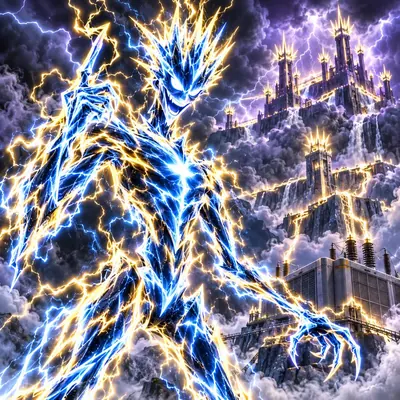
Villain facts
| Name | The Surge |
|---|---|
| Side | Villain |
| Lair | The Thunderhead, a purple-gray storm-cloud castle over the Power Plains, with lightning bridges zig-zagging down to the Gray Box Gate |
| Powers and tricks | Spike (a quick jump in voltage), Brownout Drag (voltage dipping too low), Pop Zap (wearing out the part that helps motors start), Sizzle Snap (scorching the AC’s power switch) |
| Henchmen | Flickers, giggling spark sprites that make lights blink and then fizz out |
| Weakness | He has to pass through the Gray Box Gate. Guard the gate and many of his jolts slip away. |
| Catchphrase | “Lights flicker. I strike.” |
Where did The Surge come from?
From the Wing Force files.
On a summer evening, a storm rolled over the hills. Lightning cracked across the sky. The lights in a whole neighborhood flickered, dimmed and flared.
In one backyard, an outside unit was just starting up when a jolt came racing down the line. Sparks flew inside its little gray panel. But this spike of power didn’t fade away with the thunder. It liked what it found: the tiny parts that start the whole machine.
It gathered itself out of the crackle, grinned a zig-zag grin, and zipped back up into the clouds to wait for the next storm. The Surge was born.
He’s fast, twitchy and impatient, he talks in quick bursts (“BZZT! KRAK!”), and he hates being grounded. His Blackout Bolt plan is CLASSIFIED.
What is The Surge, really?
The Surge is a power surge: a quick, powerful spike in the electricity flowing into a home, which can damage the small electrical parts that start an air conditioner.
Electricity normally flows into a house at a steady push, called voltage. A surge is a sudden jump far above normal, lasting only a split second. Nearby lightning can cause one. So can the power company switching equipment, or power coming back on after an outage. The opposite problem, a brownout, is when voltage dips too low, which makes motors work harder and run hot.
An outside AC unit has a few small parts that get hit hardest:
- The starter can. A small can that gives the motors a strong kick to start and helps them keep running. When it wears out, the unit often hums but won’t start.
- The on-off switch. It turns the outside unit on and off when the thermostat calls. Sparks can scorch it, so it chatters, clicks or won’t switch on.
- The little computer (in systems that have one) that helps run the unit.
Big jolts can even damage the motors inside.
How do grown-ups fight back? A technician can install a surge protector at the outdoor unit. It helps block many jolts, but nothing makes a unit surge-proof, and nothing stops a direct lightning strike. After an outage or flicker, a smart move is to set the thermostat to OFF, wait a few minutes after the power comes back, and then turn it on. If the AC hums, buzzes, clicks without starting, or smells burnt, turn it off at the thermostat and call a pro instead of restarting it again and again.
Only trained technicians open the electrical box, and they shut the power off first. Heat Dome makes an AC work too hard; The Surge makes it stop.
Your mission: Storm Watch
- When there’s lightning, stay inside.
- After a storm, listen. If the AC hums, clicks, buzzes, won’t start, or you smell something burnt, tell a grown-up right away.
- Never touch the outside unit, the gray box beside it, the breaker panel or any wires. That’s the Red Zone, for trained grown-ups only.