Skip to content

Mold

Mold in your AC system or ductwork? Gold Eagle Services is a licensed Texas mold remediation company that handles HVAC mold: the air handler, evaporator coil, drain pan and ducts. On a larger project, we do the HVAC scope of the remediation protocol alongside the licensed mold remediation contractor who leads it. Mold in walls, attics or belongings goes to a general mold remediation company.

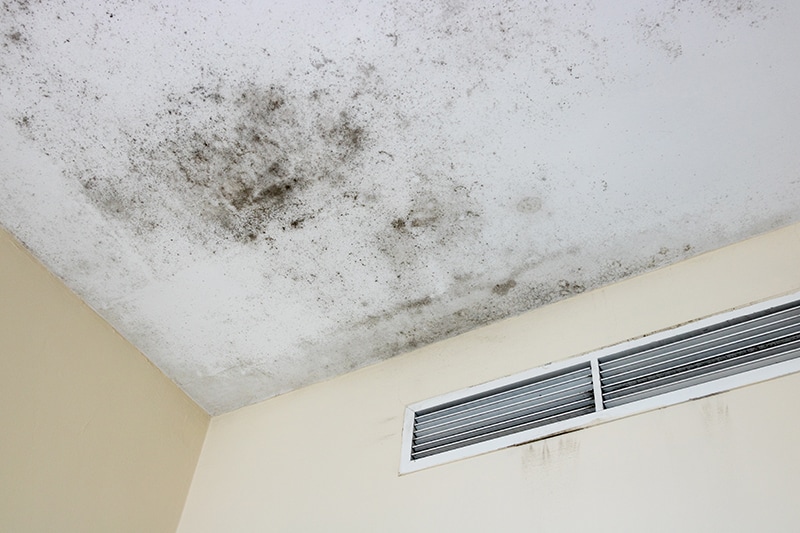
Dark spots spread across a pale ceiling beside a beige wall, above a long rectangular air vent with horizontal slats.

Why HVAC Mold Work Takes Two Texas Licenses

Texas licenses air conditioning work and mold remediation separately, and mold inside an AC system needs both. The TACLA license (Air Conditioning Contractor) covers opening the system: the air handler, the coil compartment, the plenums and the ductwork. The RCO license (Mold Remediation Company) covers applying biocides, treating contaminated surfaces and carrying out a mold remediation protocol.

Gold Eagle Services holds both:

  • RCO1783: Texas Mold Remediation Company License
  • TACLA119235: Texas Air Conditioning Contractor License

Before you hire anyone for HVAC mold work, ask for both license numbers and look them up at tdlr.texas.gov.
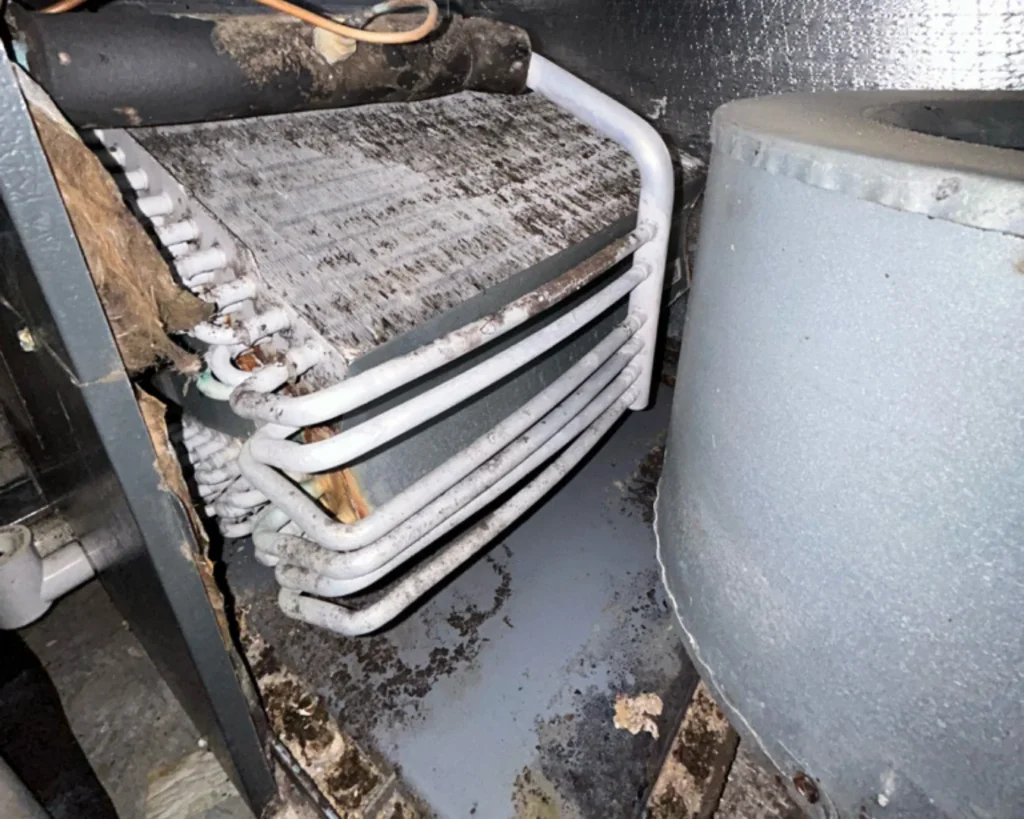
An opened HVAC unit shows dark speckling across its exposed evaporator coil, with white refrigerant lines looping over the metal fins.

Mold on the Evaporator Coil & Air Handler

In most Austin homes the air handler sits in the attic, and its evaporator coil sweats water through the whole long cooling season. Dark, damp and fed humid air on every cycle, it is exactly where mold takes hold. Mold that grows here rides the airflow into every duct each time the system runs. Treating it properly means opening the coil compartment and following a documented treatment protocol.

Call 512-489-4653
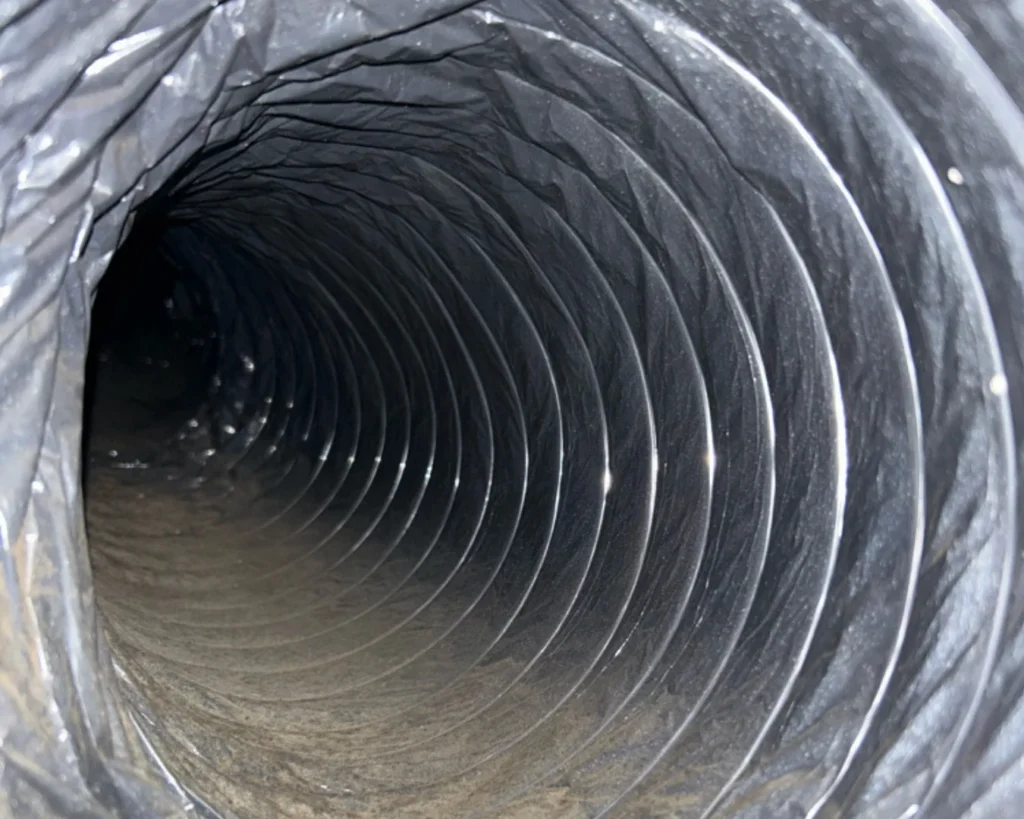
A close view inside a dark, ribbed HVAC duct shows dust and light-colored residue along the lower surface and inner folds.

Mold in Ducts & Plenums

Mold can grow inside supply ducts, return ducts and the ductboard plenum boxes of an attic system long before it shows at the registers. When a mold inspection or environmental assessment finds it in the ducts, the protocol usually calls for opening the affected sections, HEPA vacuuming, treating the surfaces and, in severe cases, replacing the duct. We handle the mechanical access and the HVAC-side work the protocol assigns to us, and coordinate with the mold remediation contractor who leads the project.

Call 512-489-4653
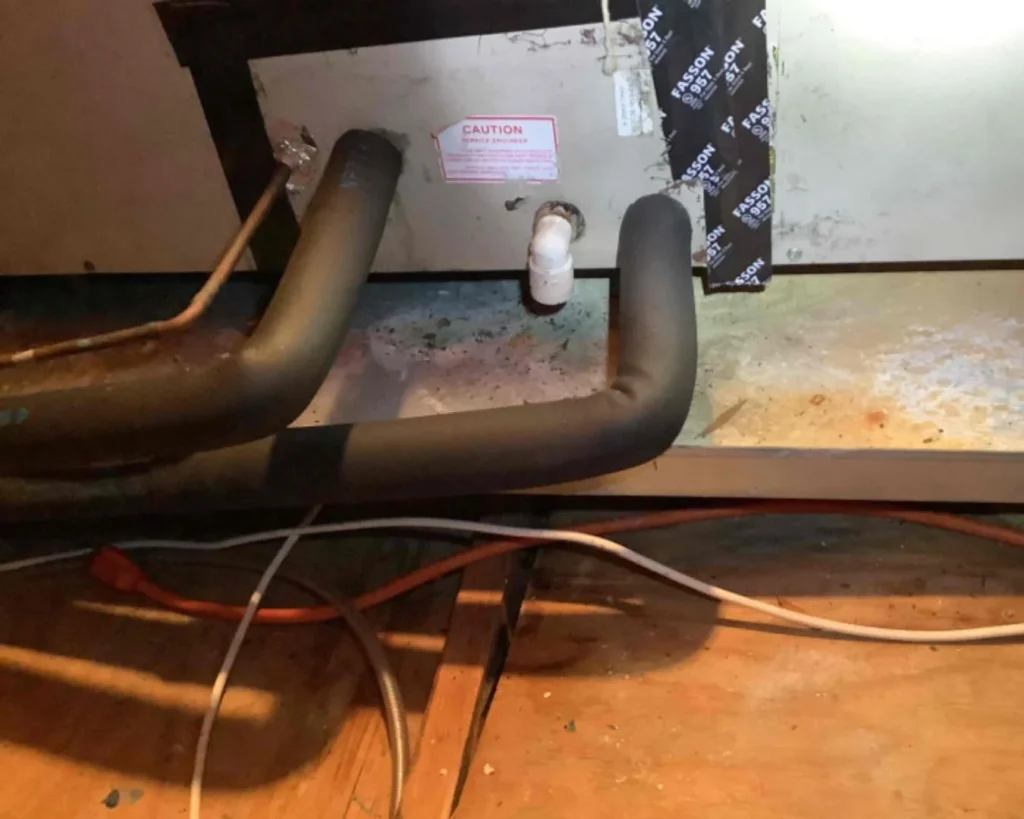
Large insulated HVAC pipes and smaller utility lines run through a tight attic space, with a caution label visible on the panel above.

Drain Pan, Condensate & the Moisture Source

Standing water in the drain pan is one of the most common ways mold starts inside an air handler. A clogged drain line, a failed float switch or a pan pitched the wrong way keeps that water sitting there, and the mold comes back even after remediation. That is why we fix the moisture source along with the mold.

Call 512-489-4653

For Mold Remediation Contractors: the HVAC Scope

If you’re a mold remediation contractor (MRC) with a protocol that includes HVAC scope, send it to us. We review the protocol, quote the HVAC portion as its own scope, and do the mechanical side of the remediation, so you aren’t subcontracting that part blind. When post-remediation verification or clearance sampling is part of the protocol, we work alongside the environmental consultants and testing companies doing it across Central Texas. More on how we work with MRCs: HVAC scope for mold remediation contractors.

Frequently Asked Questions

Yes. Send the protocol over and we'll review the HVAC scope, ask any clarifying questions, and set up a free on-site inspection if needed. We work within an existing protocol and coordinate directly with the MRC or environmental consultant managing the project.

Mold in Your AC System or Ductwork? Let’s Talk.

Call 512-489-4653
Same-day service
BookTextCall 512-489-4653Call